Project “Atlas”
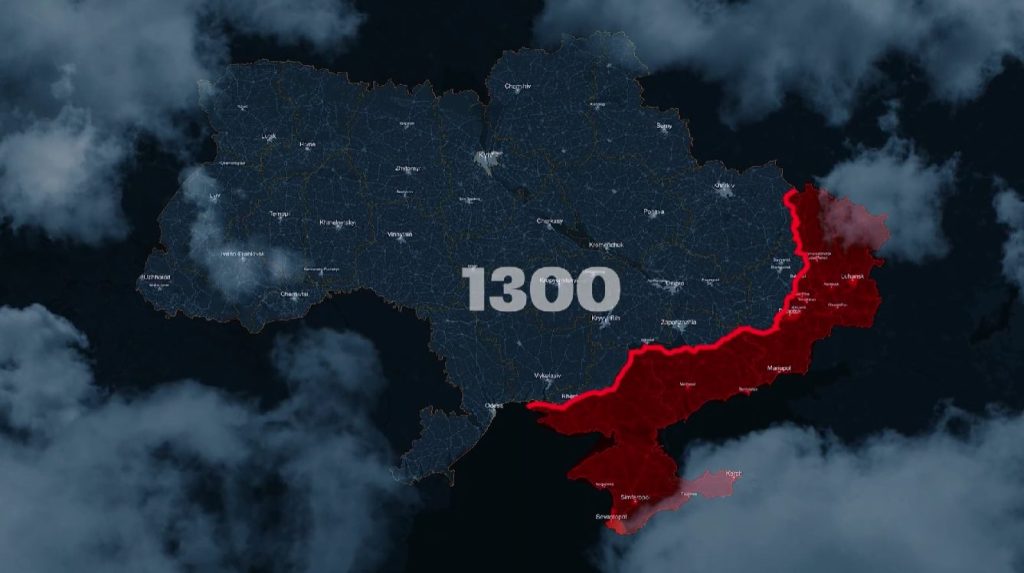
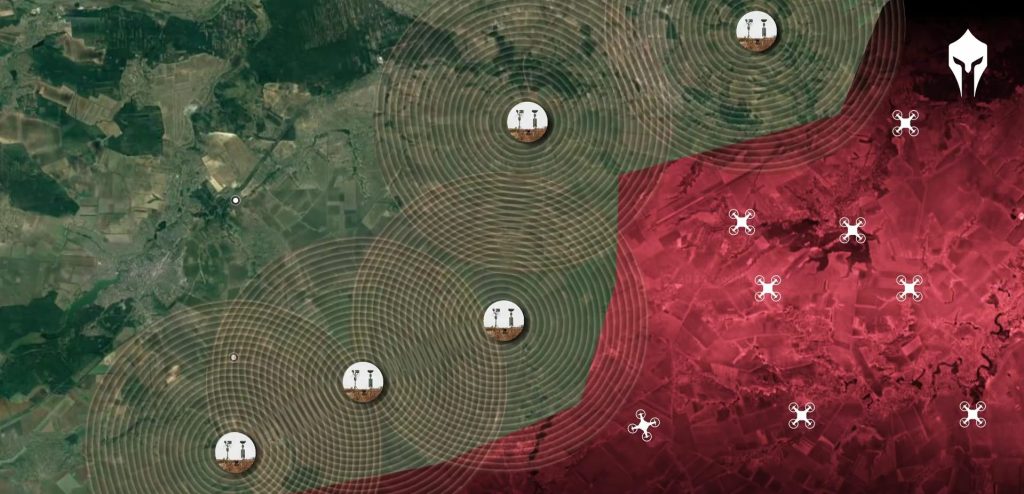
Atlas aims to equip units of the Defense Forces of Ukraine along the front line with modern, highly effective anti-drone systems developed by KVERTUS. These systems will be integrated into a large-scale ecosystem that will form an “anti-drone wall” stretching over 1,300 km.
The project was initiated by the Brave1 Defense Technology Cluster and British defense companies, and is supported by the Kyiv School of Economics.
“Atlas” is a project initiated by the Brave1 Defense Technology Cluster and British defense companies, supported by the Kyiv School of Economics. The project’s partners include major Ukrainian businesses as well as both international and Ukrainian state institutions.
From a technical perspective, the project is based on innovative developments in Ukraine’s defense sector and solutions created by KVERTUS. It combines drone detection tools — classified as radio-electronic reconnaissance systems — with digital electronic warfare (EW) tools capable of neutralizing drones at distances of up to 8 km. This level of effectiveness is several times greater than that of widely used EW systems on the front lines.
“Atlas” is of critical importance: in a time of turbulent political developments that demand greater self-reliance, this project will help save the lives and health of many Ukrainian defenders.
MS AZIMUTH + LTEJ MIRAGE Systems
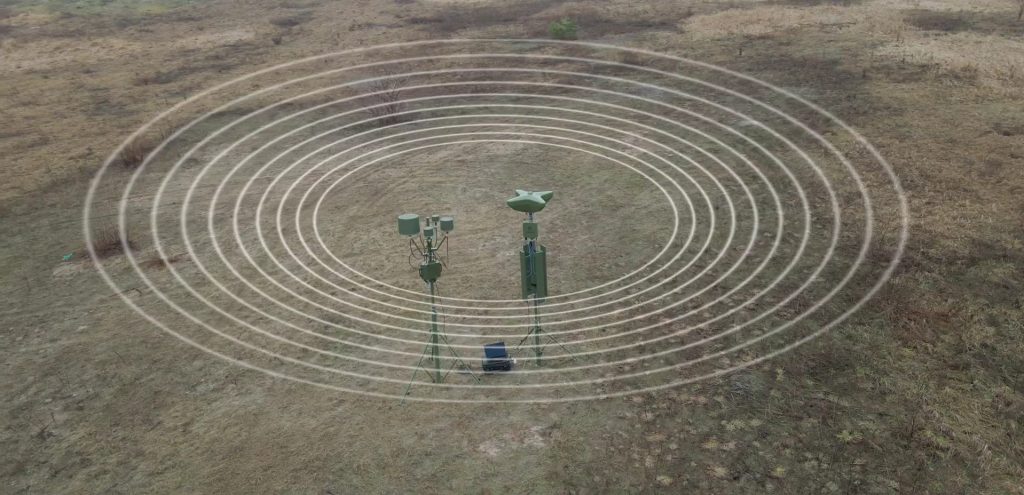
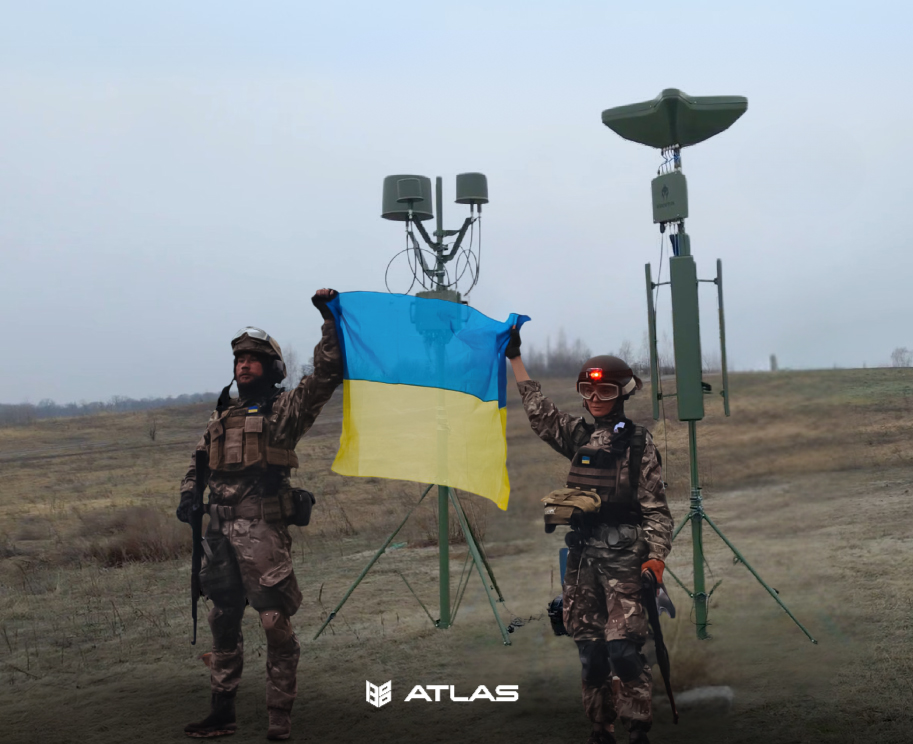
The functional unit of the project consists of a complex combining the MS AZIMUTH electronic reconnaissance system and the LTEJ MIRAGE electronic warfare system.
MS AZIMUTH detects drones and their operators’ transmitters in passive detection mode. This means it only “listens” to the radio spectrum without emitting any signals, making it undetectable by enemy reconnaissance systems — a key advantage in combat conditions. MS AZIMUTH has an operating range of up to 30 km. It even outperforms some foreign counterparts in scanning speed, enabling real-time insights into drone settings that are crucial for effective neutralization.
LTEJ MIRAGE is a next-generation electronic warfare system. Unlike conventional “noise”-based EW systems — making up around 95% of those on the front line — it operates using a mathematical model. This gives it a significantly greater neutralization range and a much broader spectrum of radio interference. It can even “break through” advanced drone control protocols designed to protect drones from standard EW tools.