
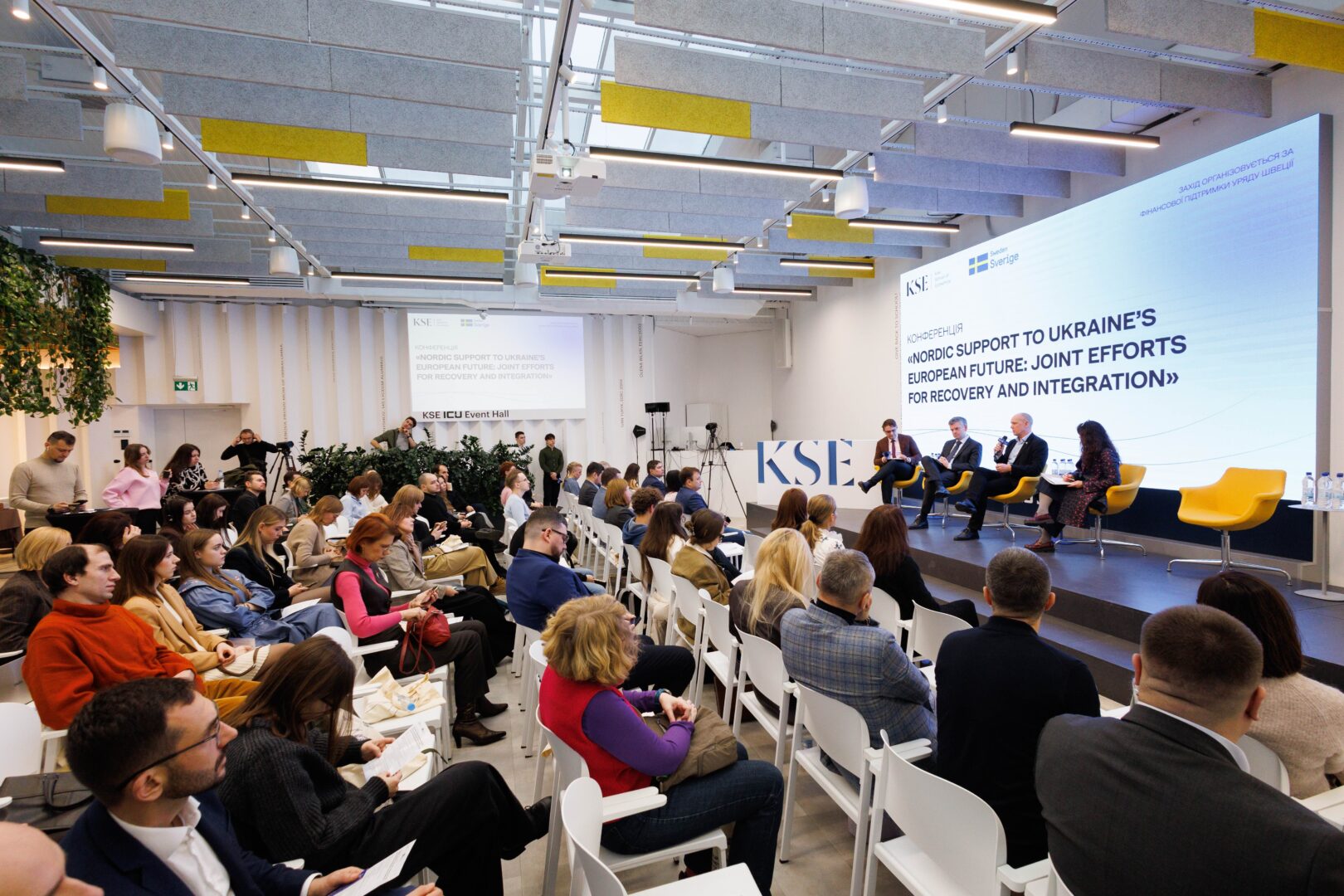
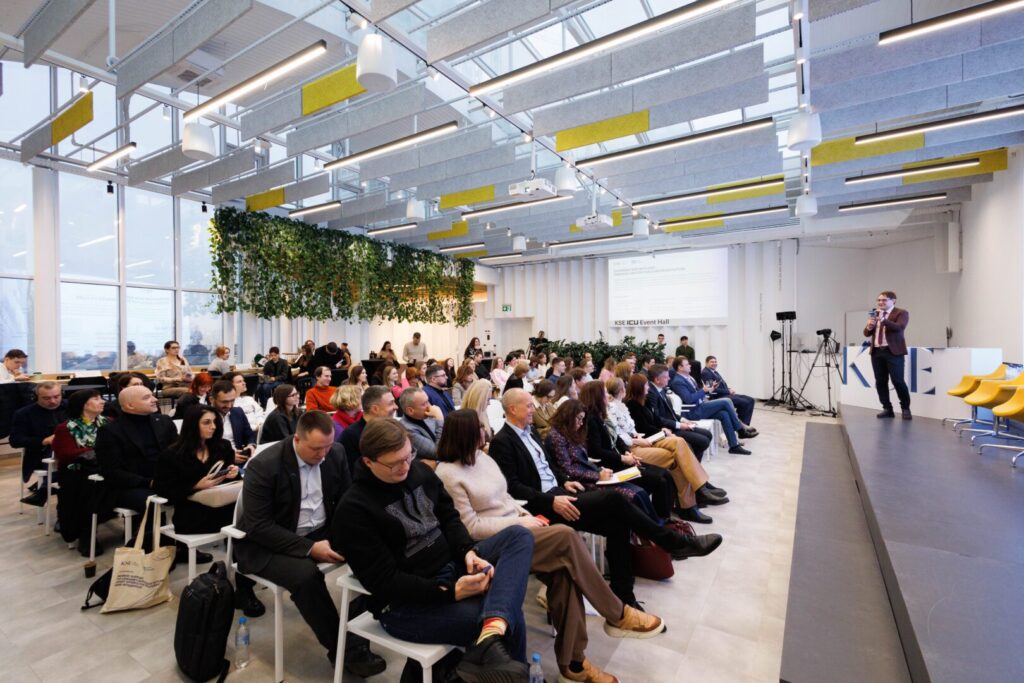
On December 8, the Kyiv School of Economics (KSE) hosted the international conference “Nordic Support to Ukraine’s European Future: Joint Efforts for Recovery and Integration.” The event focused on the role of the Nordic countries — Sweden, Denmark, Norway, Finland, and Iceland — in strengthening Ukraine’s resilience, supporting post-war recovery, and advancing European integration.
The conference brought together diplomats, researchers, civil society leaders, and representatives of government institutions to outline the next steps for deepening the partnership between Ukraine and the Nordic countries. The event became possible thanks to the financial support of the Government of Sweden and was organized in cooperation with the Office of the Deputy Prime Minister for European and Euro-Atlantic Integration.
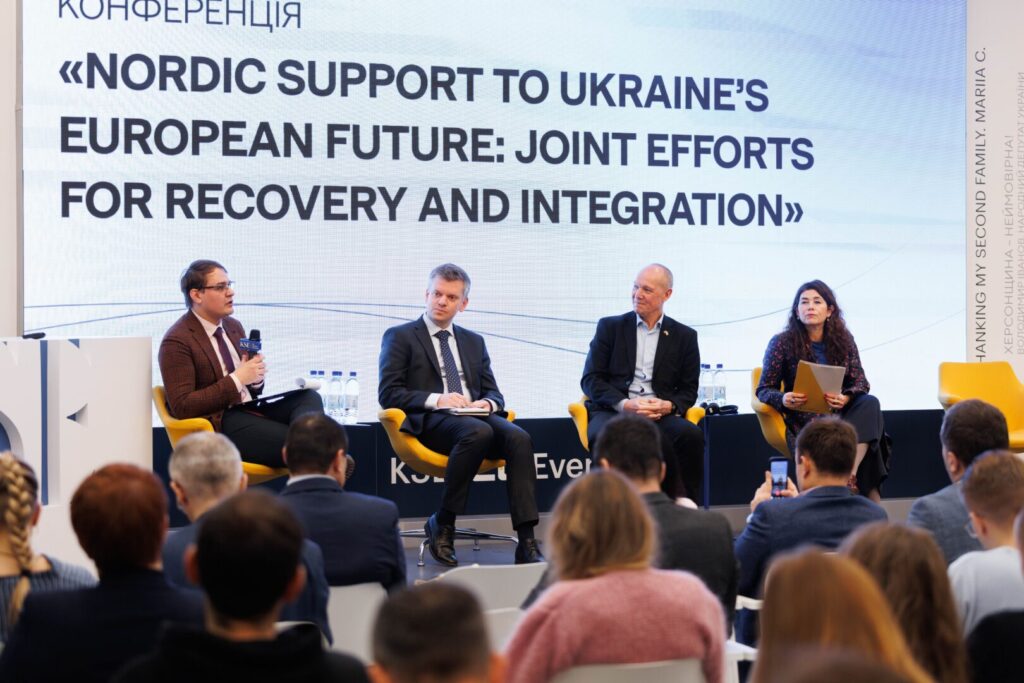
The first discussion was opened by KSE Rector Tymofii Brik, who presented KSE’s research findings on Nordic support for Ukraine. Since the start of the full-scale invasion in 2022, Denmark, Finland, Iceland, Norway, and Sweden have become reliable partners, providing substantial financial, military, and humanitarian assistance.
In total, these countries have provided €28.4 billion, equivalent to 8.8% of all international support for Ukraine. Denmark, Sweden, Norway, and Finland are among the Top 15 bilateral donors, and in terms of assistance relative to GDP, these countries rank among the world leaders.
Tymofii Brik, Rector of the University of the Kyiv School of Economics (KSE):
“The support of the Nordic countries is not just a political decision — it is a testament to their genuine commitment. We are sincerely grateful to taxpayers and governments that demonstrate unity by directing significant resources not to domestic needs but to supporting Ukraine. This assistance spans a wide range of areas — from defense and energy to education and institutional cooperation — and in many of these fields, the Nordic countries are global leaders. Thanks to the support of our partners, KSE students have the opportunity to learn in a strong international environment, and our academic community continues to grow and advance high-quality research. The university brings together leading professors and scholars who develop educational programs, lead scientific projects, and shape the future of Ukraine.”
A special topic of the event was the launch of the Swedish Center for European Future of Ukraine, opened at KSE in 2025 with the support of the Government of Sweden. The Center has already established itself as a powerful interdisciplinary platform for research and policy analysis on Ukraine’s European integration. It unites the academic, analytical, and discussion capacities of KSE Institute and KSE University. Through educational programs, research projects, and public events, the Center serves as an intellectual hub for strategic cooperation between Ukraine and Sweden on the path toward a shared European future.
An important component of its work is academic collaboration: 14 KSE professors have been awarded the honorary title of Swedish Distinguished Professors. Their expertise and engagement raise the academic standards of KSE and contribute to developing a new generation of leaders capable of understanding and advancing democratic processes nationally and internationally.
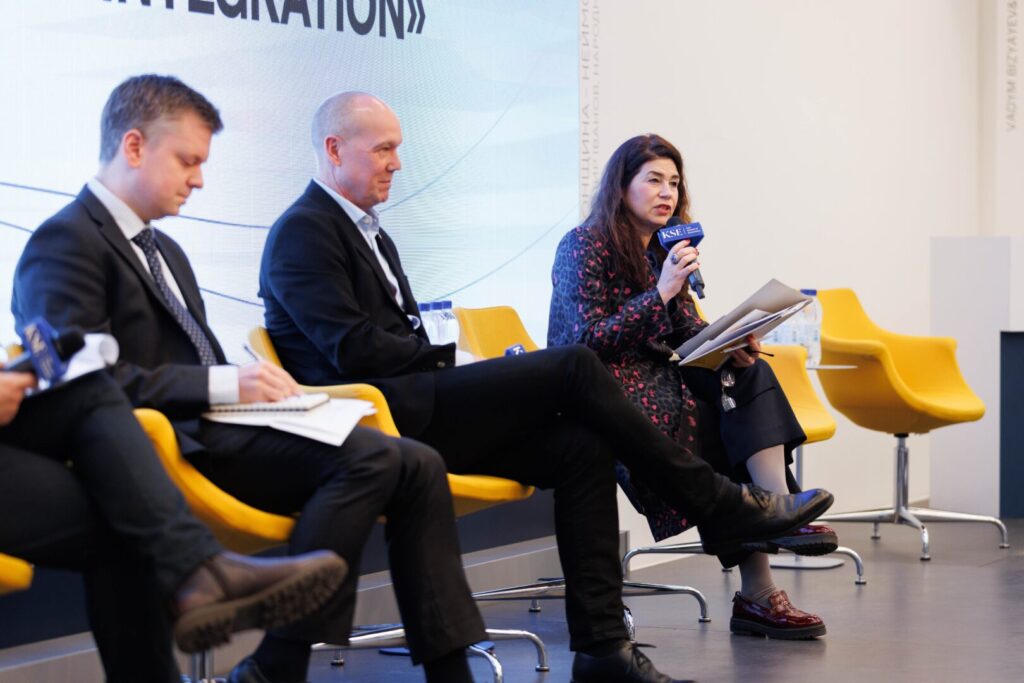
Representatives of the embassies of Sweden, Denmark, and Norway discussed the contribution of the Nordic countries to Ukraine’s progress toward the EU, cooperation during the full-scale war, and the role of trust and equality as foundations for reform.
Elsa Håstad, Deputy Head of Mission at the Embassy of Sweden in Ukraine:
“Peace is existentially important for all of us. And today it is under threat — the violation of peace creates risks for the entire world. This is not only about our bilateral relations or solidarity with Ukraine — it is about safeguarding the global order as we know it. If one can attack another country with impunity, undermining the security system and international humanitarian law, then the question becomes: what kind of world are we living in?”
A conversation with Ann Linde, former Foreign Minister of Sweden (2019-2022), and Dmytro Kuleba, former Foreign Minister of Ukraine (2020-2024), focused on the crucial role of diplomacy, the experience gained by Ukraine and the EU countries during the Russian–Ukrainian war, as well as the global consequences of Russian aggression and the importance of allied unity in countering it. The second panel was moderated by Alina Zubkovych, Academic Director at KSE and Chair of the Nordic Ukraine Forum.
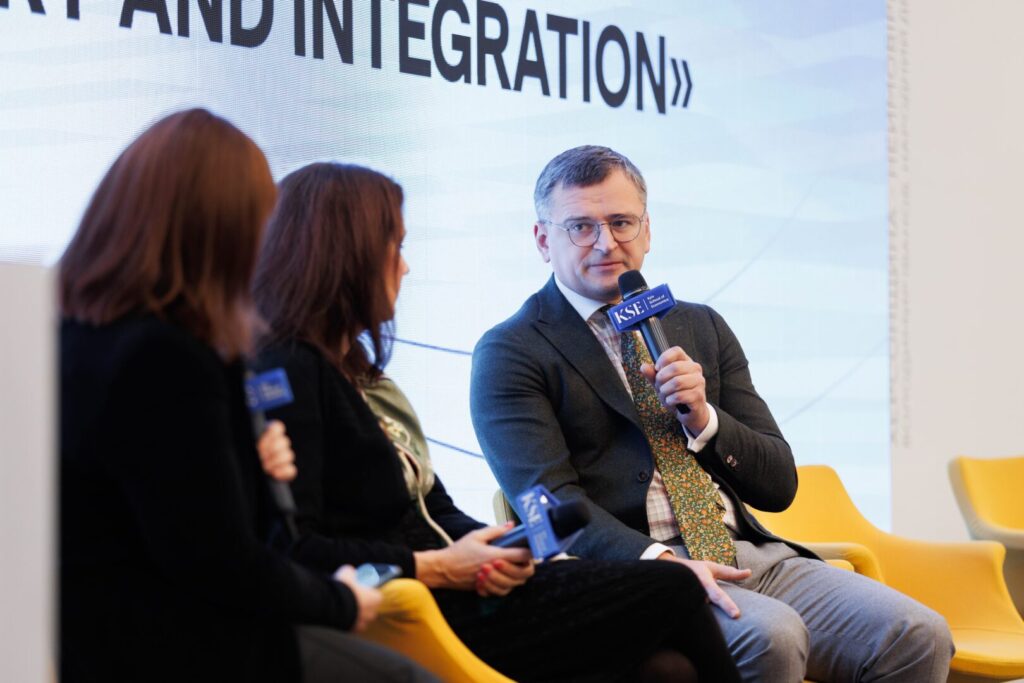
Dmytro Kuleba, former Foreign Minister of Ukraine (2020-2024):
“Two fundamental shifts occurred after 2022. First, the world recognized that Ukraine is Europe. Second, Ukraine became a visible and meaningful part of the global order. Russian aggression against a NATO ally in Europe is only a matter of time — the question is not whether it will happen, but when. They will continue to test and attack the very concept of unity.”
Ann Linde, former Foreign Minister of Sweden (2019-2022):
“One of the key tasks is deepening partnerships, interpersonal contacts, and cooperation between businesses and institutions. These bilateral connections matter enormously because diplomacy is not only official negotiations — it is also relationships and long-term commitment. In the Nordic countries, we have built institutions that make us stronger, and it is crucial to bring our institutions closer together and develop large-scale exchange programs between our countries.”
The third panel focused on the role of civil society in strengthening international support for Ukraine. Representatives of civic and volunteer initiatives discussed the contribution of civil society to building trust in Ukraine, the experiences of Ukrainian communities in Sweden, Denmark, Norway, Finland, and Iceland, as well as Nordic practices of equality, education, and sustainable development that may benefit Ukraine.

Speakers included Julie Arnfred Bojesen, Director of the Ukrainian-Danish Youth House; Ellen-Elena Reynolds, Director of Operation Aid; Tilda Addenbrooke, military medic; Daria Kulynych, Project Manager, Repower; and Viktoriia Hermanchuk, President of the KSE EU Club, a KSE student organization.
The conference became an important platform for deepening the strategic partnership between Ukraine and the Nordic countries. Diplomats, experts, and civil society leaders reaffirmed a shared vision: support for Ukraine today is an investment in a stable European future.
KSE Foundation sincerely thanks its partners and donors from the Nordic countries, thanks to whom the university is able to support educational programs, scholarships for talented youth, academic initiatives, and the development of the research community.