
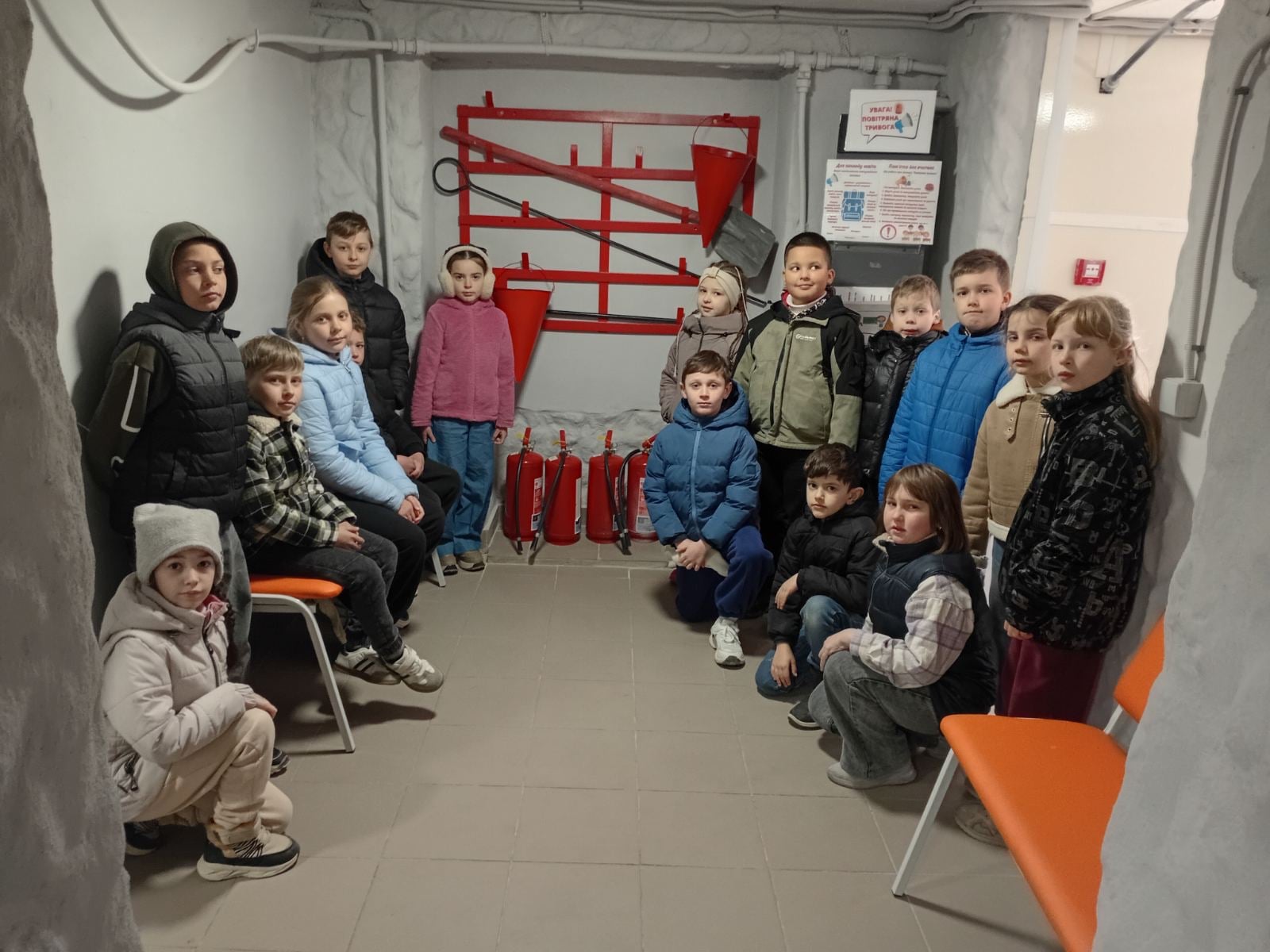
At the Lyubashivskyi Lyceum № 1 in the Odesa region, where 491 сhildren study, a shelter has been renovated. The project was implemented by KSE Foundation with the support of Education Cannot Wait (ECW). Thanks to the upgraded shelter, all students can continue offline learning even during prolonged air raid alerts.
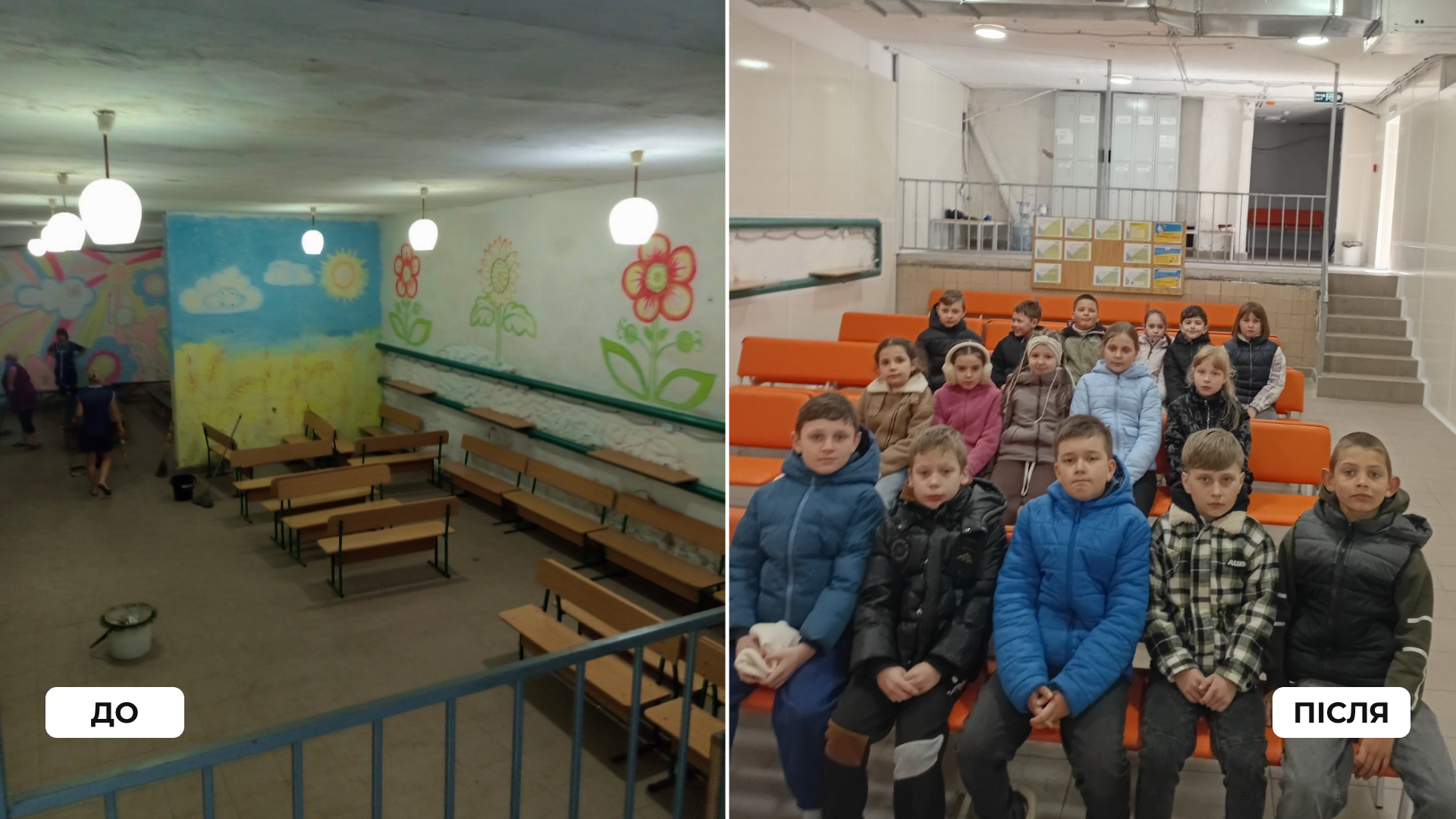
The basement space was dried and reinforced, utilities, ventilation, and lighting systems were upgraded, new doors were installed, seating areas were arranged, and the sanitary facilities were modernized.
Lyubashivskyi Lyceum № 1 is one of the educational institutions where KSE Foundation supported shelter modernization as part of the multi-year resilience program (MYRP) funded by Education Cannot Wait (ECW). Since 2022, KSE Foundation together with its partners has equipped more than 100 shelters in schools and kindergartens across Ukraine, helping over 45,000 children return to in-person learning. Of these, 15 shelters were implemented within the MYRP program supported by ECW.
“For us, equipping shelters is an opportunity to bring children back to offline learning, live interaction, and a sense of stability even amid the full-scale war. We see how important it is for schools to have spaces where children can safely stay during air raid alerts and continue learning. That is why, for the fifth consecutive year, KSE Foundation together with its partners has been systematically investing in creating a safe educational environment for Ukrainian children,” said Maryna Borysenko, Director of Programs and Implementation at KSE Foundation.
Lyubashivskyi Lyceum № 1 is an important educational hub for the local community, serving children from three settlements: Ivanivka, Ahafiivka, and Vyshneve. The school also educates eight children from the Kherson and Zaporizhzhia regions who lost their homes because of the war, as well as 22 students with special educational needs.
After the start of the full-scale invasion, the school, like most educational institutions in Ukraine, switched to remote learning. However, prolonged online education gradually began affecting both students’ academic performance and emotional well-being. According to the principal of Lyubashivskyi Lyceum № 1, Nataliia Moskovchuk, younger students found it difficult to readjust to classroom life after returning to school. Teenagers lost motivation and live communication during remote learning, while children with special educational needs could no longer fully attend correctional sessions with psychologists, speech therapists, and special education teachers.
That is why returning to offline learning became one of the school’s key priorities. Starting September 1, 2022, the school resumed in-person education. The teaching staff independently arranged a basic shelter so children could return to their classrooms. Before the renovation, however, the basement did not meet basic safety and comfort requirements. Although officially designated as a radiation shelter, the premises had not been used for years. It was a damp, cold, and dark space with uneven floors, poor ventilation, and a strong smell of mold and humidity. In some places, the walls were crumbling, while lighting was weak or completely absent.
“The previous renovation was merely cosmetic and did not address key issues such as ventilation, humidity, engineering systems, or conditions for children’s prolonged stay. Although Lyubashivka is not a frontline area, the community regularly lives under the threat of air raids. Frequent and prolonged alerts only intensified the need for a full-scale modernization of the space. That is why we applied to KSE Foundation for support in creating an upgraded shelter,” said school principal Nataliia Moskovchuk.
With the support of KSE Foundation and Education Cannot Wait, the shelter underwent a comprehensive renovation:
• the premises were dried and reinforced;
• floors and walls were renovated;
• electrical wiring was upgraded and new lighting installed;
• a ventilation system was arranged;
• external fireproof doors and internal metal doors were installed;
• comfortable seating was purchased.
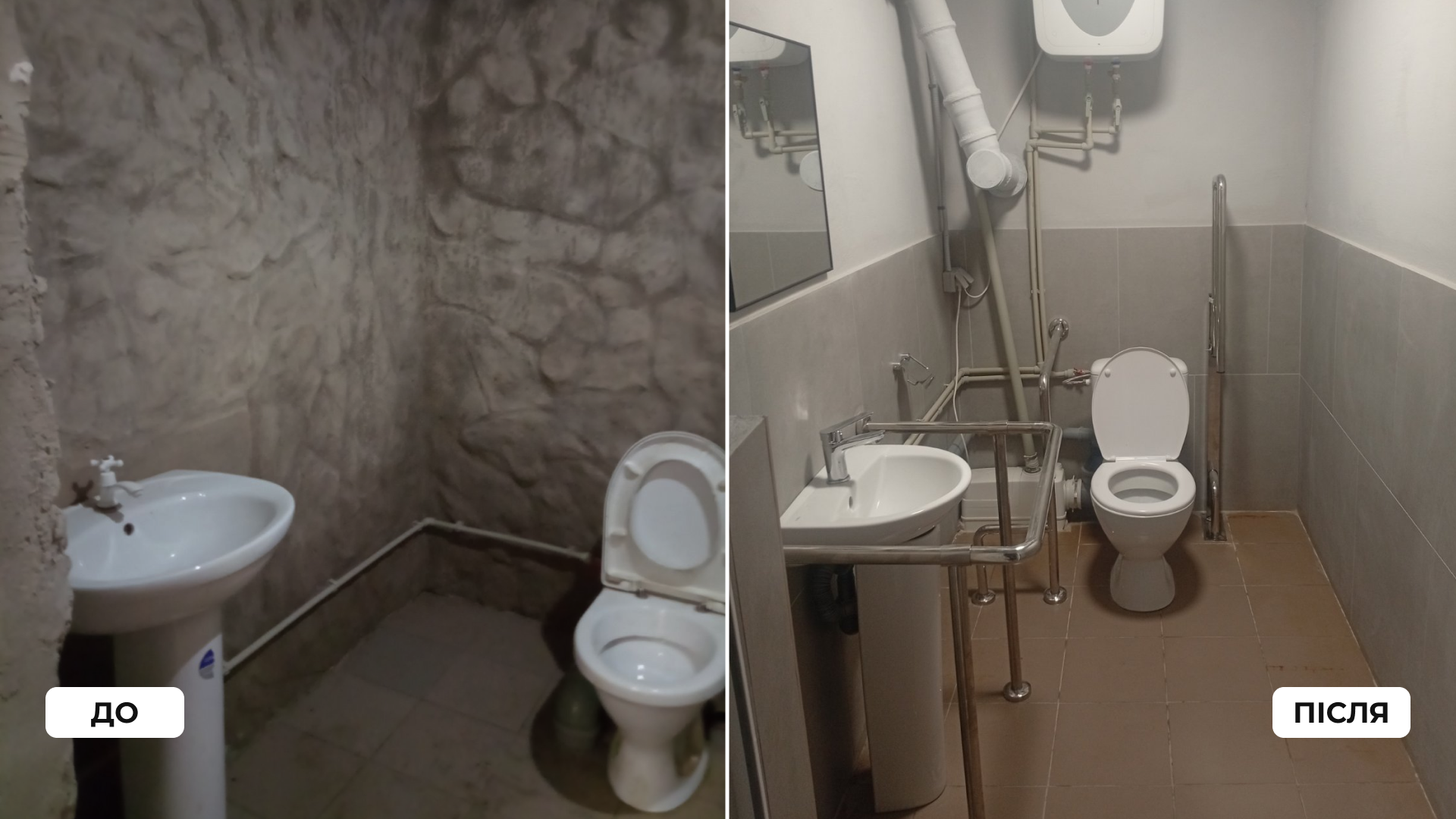
Special attention was paid to sanitary conditions: tiles were installed, new plumbing and a boiler were added, hot water access was ensured, and a restroom for people with limited mobility was equipped. Teachers now use the renovated shelter to conduct simplified lessons, organize games, and provide psychological support to children.
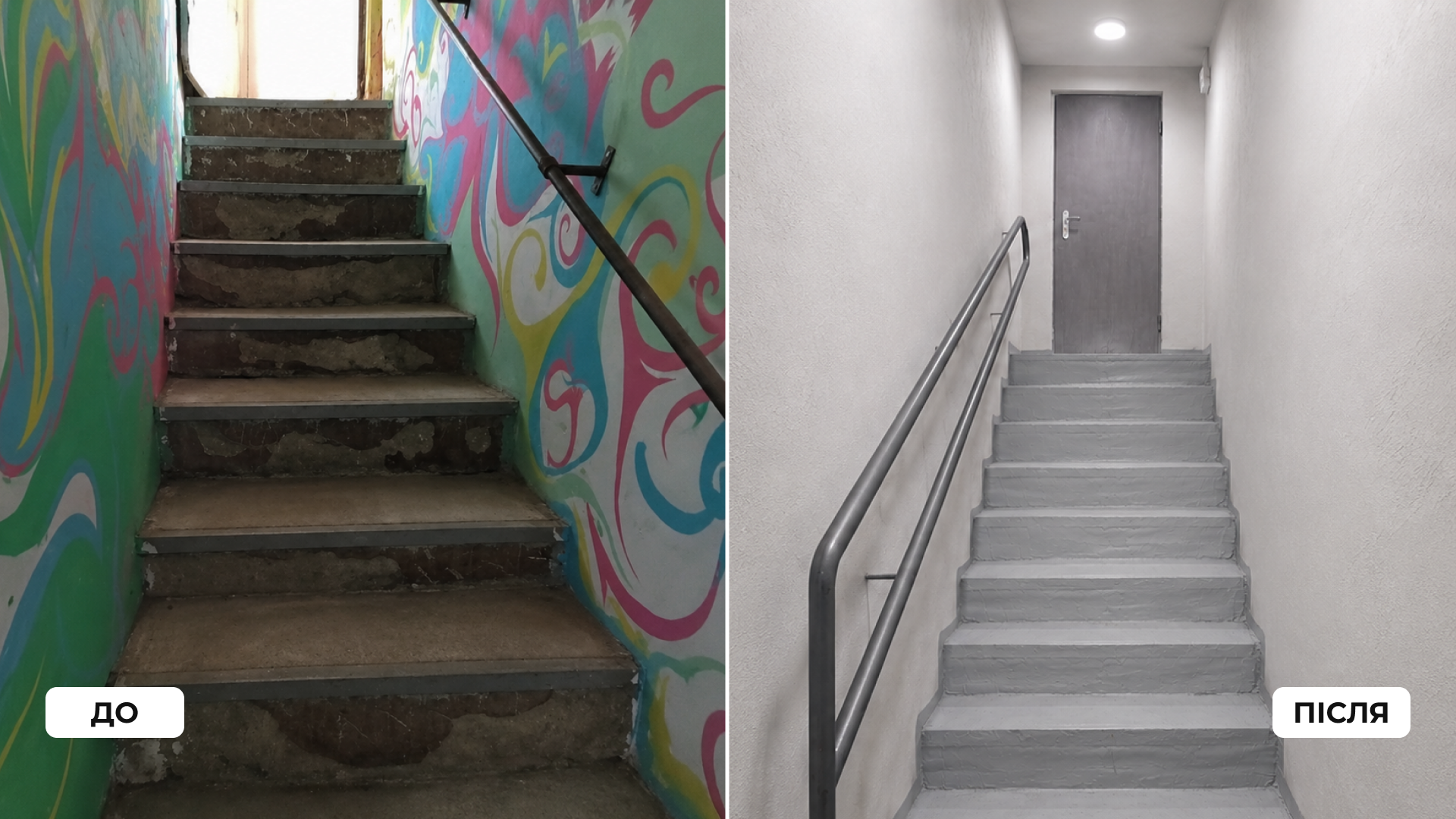
“Thanks to the support of donors, we managed to solve the key problems of the old basement: dampness, cold, darkness, lack of fresh air, and the absence of basic conditions. The level of safety and organization during air raid alerts has significantly improved. What used to be an unsuitable, stressful, and uncomfortable place has now become a safe, clean, and much more comfortable shelter where children can feel calmer and teachers can effectively organize activities with students even during prolonged air raid alerts,” added Nataliia Moskovchuk.