
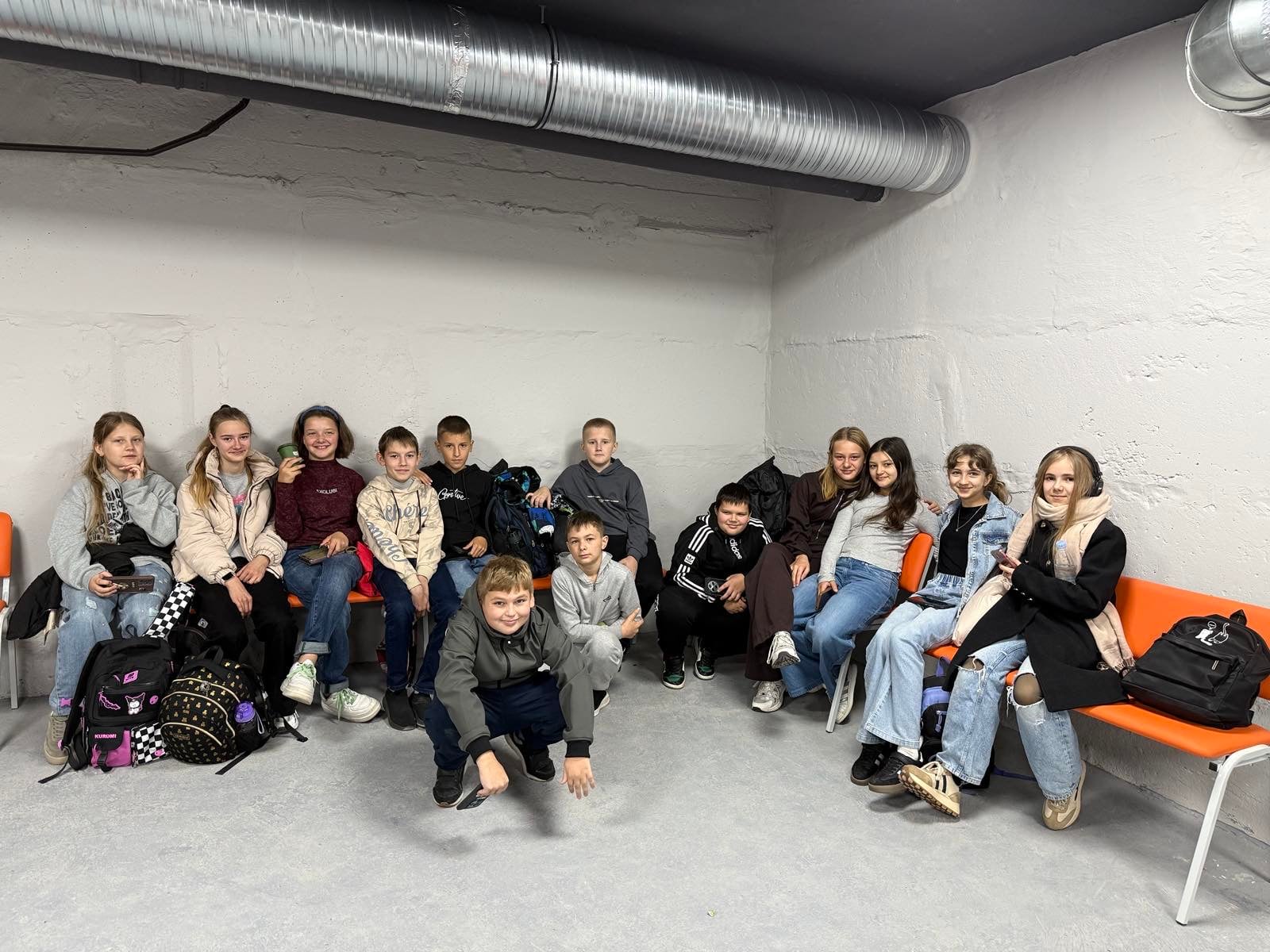
Synyava Lyceum is a hub school serving children from four villages in Bila Tserkva district — Synyava, Rokytne, Olshanytsia, and Busheve. Thanks to the charitable foundation of the Kyiv School of Economics (KSE Foundation), 426 schoolchildren now have access to a renovated shelter and can continue their studies even during prolonged air raid alerts.
This is already the third educational institution in Kyiv region where KSE Foundation has upgraded a shelter as part of the multi-year resilience programme MYRP, funded by Education Cannot Wait (ECW) — the UN global fund supporting education in emergencies and protracted crises. Since 2022, in cooperation with partners, KSE Foundation has renovated 114 shelters in Ukrainian schools and kindergartens, enabling more than 45,000 children to return to in-person learning. Fifteen of these shelters were equipped under the MYRP programme with ECW’s financial support.
“Within the ECW programme, we renovate shelters so that Ukrainian children can study offline. A properly equipped shelter is a basic requirement for bringing schoolchildren back to in-person classes. As a foundation focused on educational initiatives, support for talented youth, and human capital development, we understand that quality education is the foundation of our country’s future. Offline learning enables direct interaction between students and teachers, improving comprehension and engagement. For children with special educational needs, in-person classes often remain the only effective format,” said Maryna Borysenko, Programmes and Implementation Director at KSE Foundation.
The experience of Synyava Lyceum highlights the importance of returning schoolchildren to in-person learning. During COVID-19, the school operated remotely and developed relevant practices. Since the start of the full-scale invasion, it has functioned in a blended format. However, new challenges — including power outages and limited access to devices — made offline learning an urgent necessity.
“Distance learning has its limitations. Not all children had access to devices and the internet, electricity outages were frequent, and parental supervision was limited. As a result, the lack of live communication with peers and teachers led to a decline in socialisation and learning outcomes,” said Petro Melnyk, Principal of Synyava Lyceum.
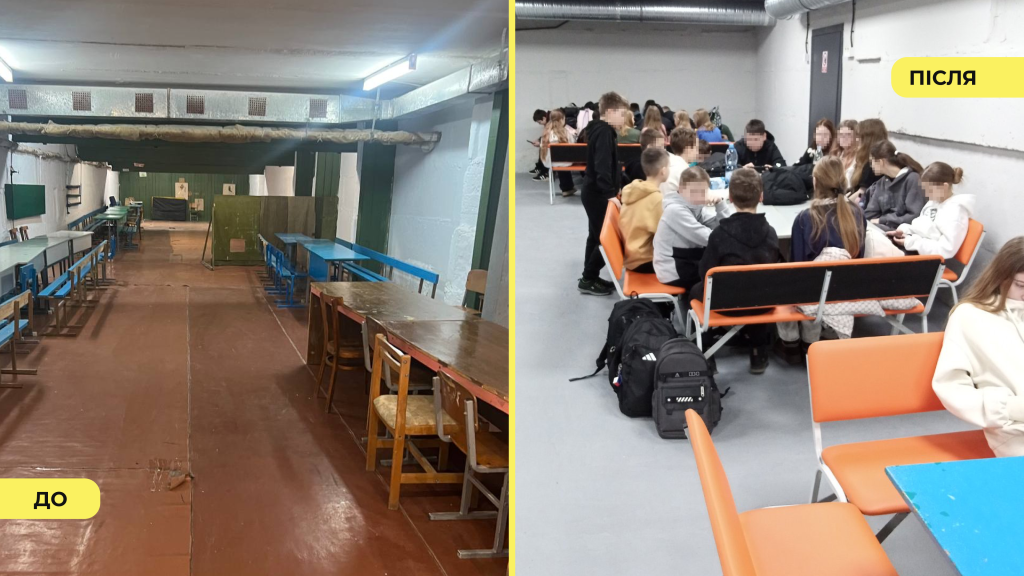
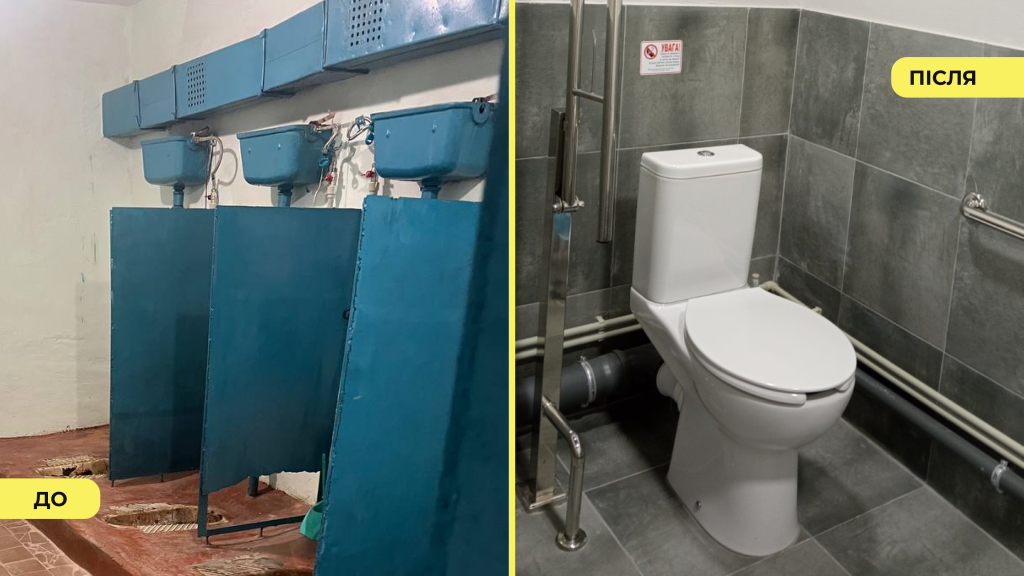
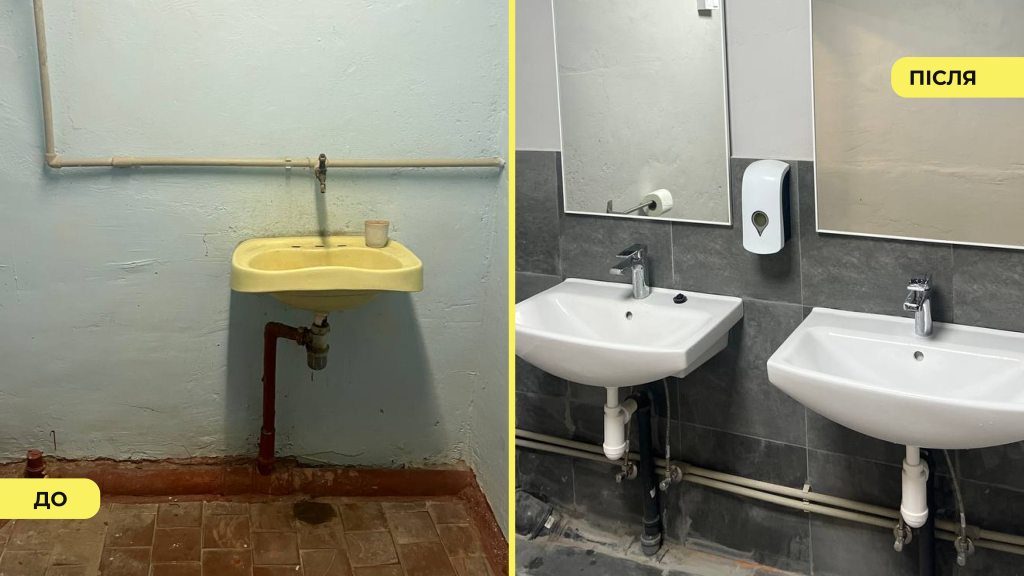
Previously, during air raid alerts, schoolchildren used a basement space that the school staff had adapted into a shelter on their own. However, it required major renovation: outdated benches and restrooms, insufficient ventilation, and poor lighting made it uncomfortable, especially during long alerts. With support from KSE Foundation, the shelter was renovated with safety, comfort, and practicality in mind. The works included:
-
dismantling old structures and conducting partial repairs of walls, ceilings, and floors;
-
installing screed and tiling in restrooms;
-
upgrading electrical wiring and lighting;
-
installing a powerful ventilation system;
-
mounting metal interior doors;
-
equipping accessible restrooms with a boiler and mirrors.
“The difference between the old and the new shelter is remarkable. Schoolchildren, teachers, and parents are sincerely grateful for the comfortable conditions. Since the renovation, far fewer students ask to go home during air raid alerts,” added Petro Melnyk.
Synyava Lyceum is the second-largest school in the community and one of its educational leaders. Its students regularly win prizes at district stages of national academic Olympiads and the Junior Academy of Sciences competitions, while school teams achieve top results in regional sports competitions.
The lyceum also educates children with special educational needs, for whom offline learning is not just convenient but critical. Five schoolchildren are enrolled in individual home-based instruction, and two study in inclusive classrooms. Each child is supported by an assistant and follows an individualised education programme. Since the first days of the invasion, the lyceum has welcomed children displaced from combat zones and temporarily occupied territories — including Kyiv, Kharkiv, Dnipropetrovsk, Kherson, and Donetsk regions. Currently, 12 children who lost their homes due to the war continue their education at the school.
The school community is actively engaged in volunteer work: teachers and students weave camouflage nets, distribute humanitarian aid, bake goods for defenders, produce trench candles, and help purchase vehicles for local servicemen.
In partnership with donors, KSE Foundation continues working to return Ukrainian children to in-person learning, ensuring that even during wartime, education remains a space of stability and development.